Fall sale  Up to 50% off + free gifts00HRS00MIN00SEC
Shop the boards →

7 reasons I'll never chop on anything but acacia

I swapped every plastic cutting board in my kitchen for solid acacia. Here is why I'm never going back.

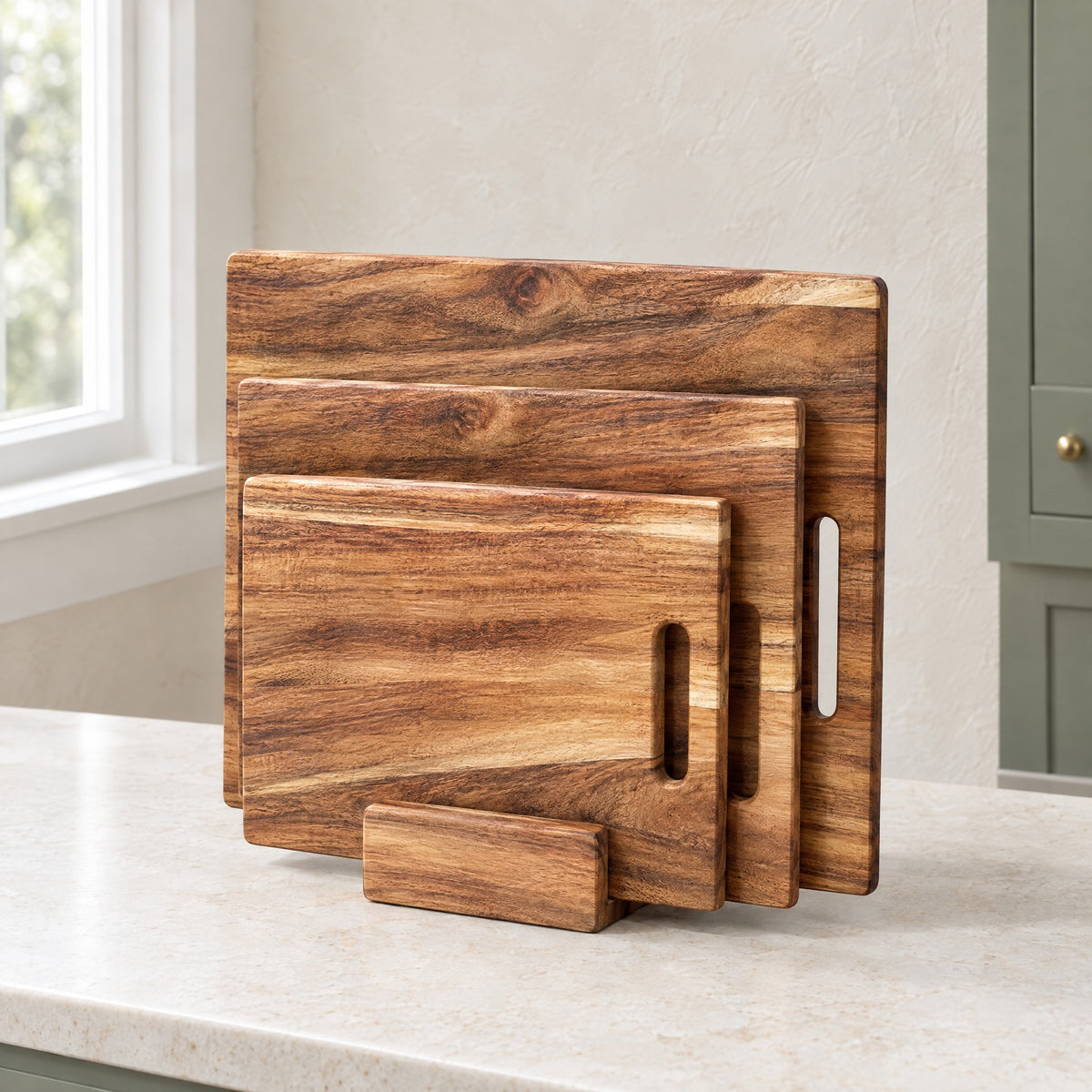
Three acacia cutting boards in the small board stand on a limestone kitchen counter
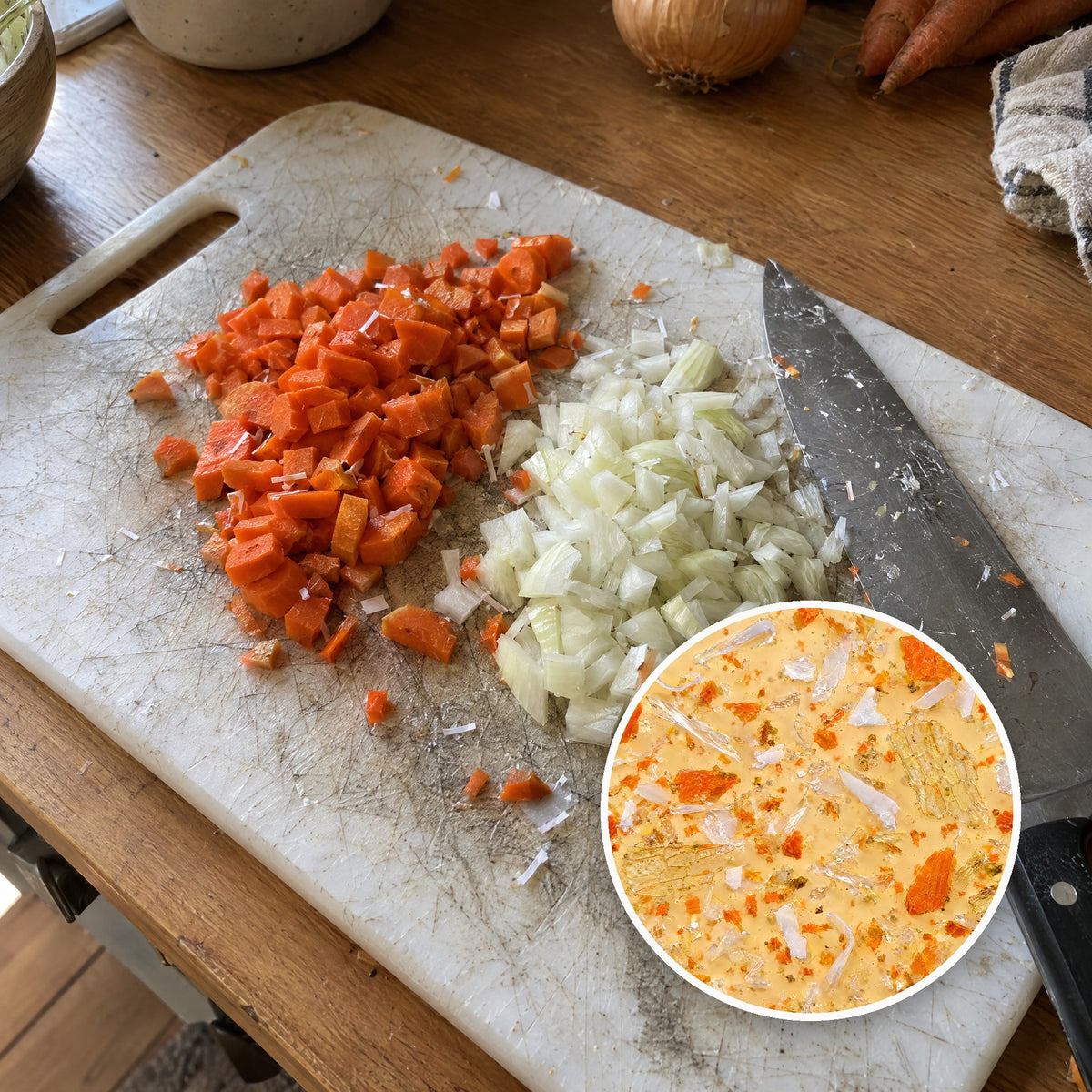
Scarred plastic cutting board with a microscope view of plastic shavings in chopped vegetables
1

Every cut was putting plastic in our food

Look at an old plastic board: all those knife scars used to be plastic. Every cut shaves a little off, straight into the vegetables, the chicken, the food I gave my kids.

Researchers estimate one plastic board can shed up to 79 million plastic particles a year. I can't control the air or the water pipes. But I can control what we chop our food on, and switching took one afternoon.

  • Zero plasticNothing to shave off into your food
  • No coatingNothing to chip or flake
Source: Environmental Science & Technology, 2023

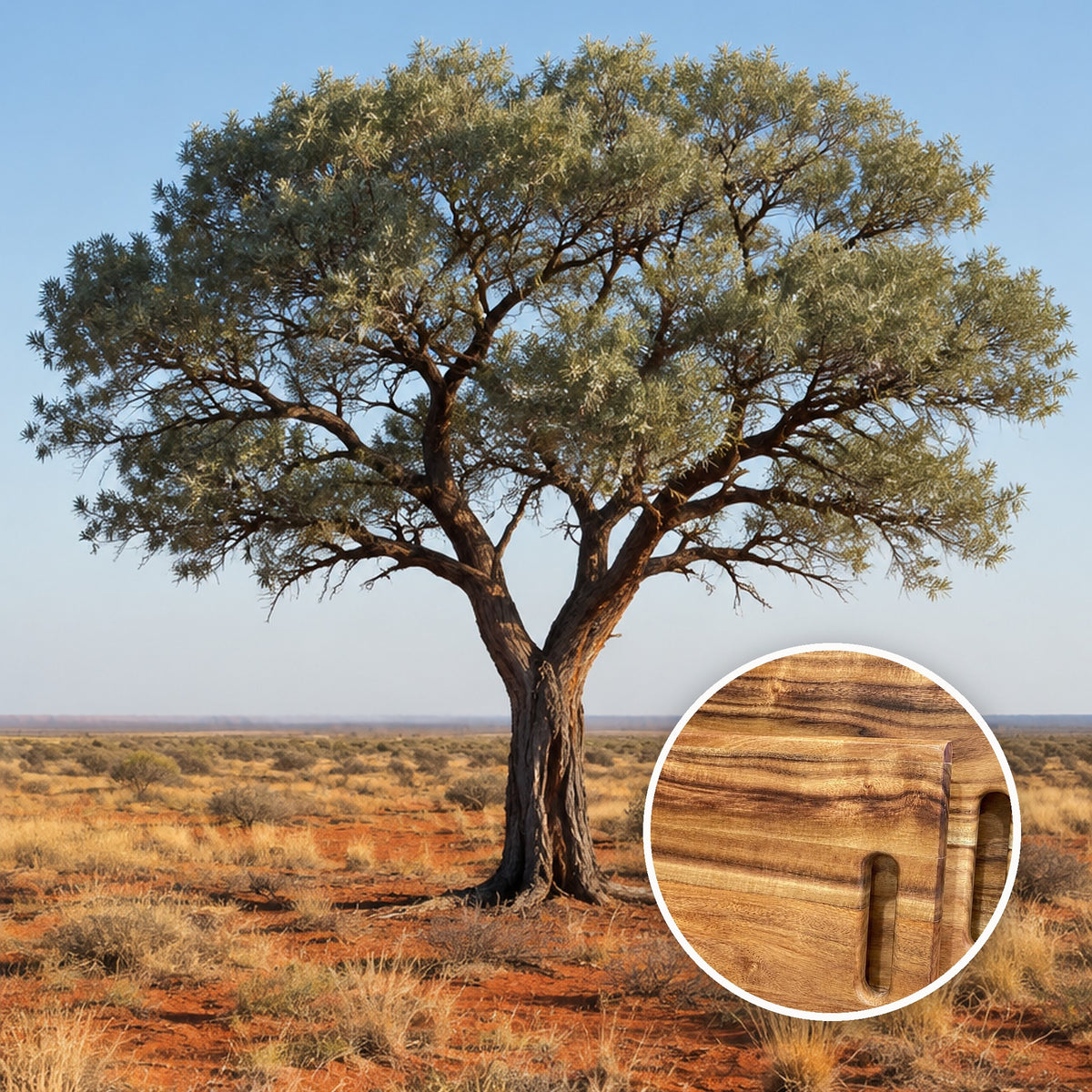
Small-leaf acacia tree in the dry outback with a close-up of an acacia board
2

Acacia from one of the harshest places on earth

Small-leaf acacia comes from northern Australia, where it survives blistering heat and months without rain. To make it, the tree grows wood that's dense, hard and naturally oily.

That's why my boards don't warp, crack or go fuzzy, and they still look like the day they arrived.

  • Dense hardwoodResists dents, warping and daily wear
  • Lifetime warrantyA new board if it ever cracks
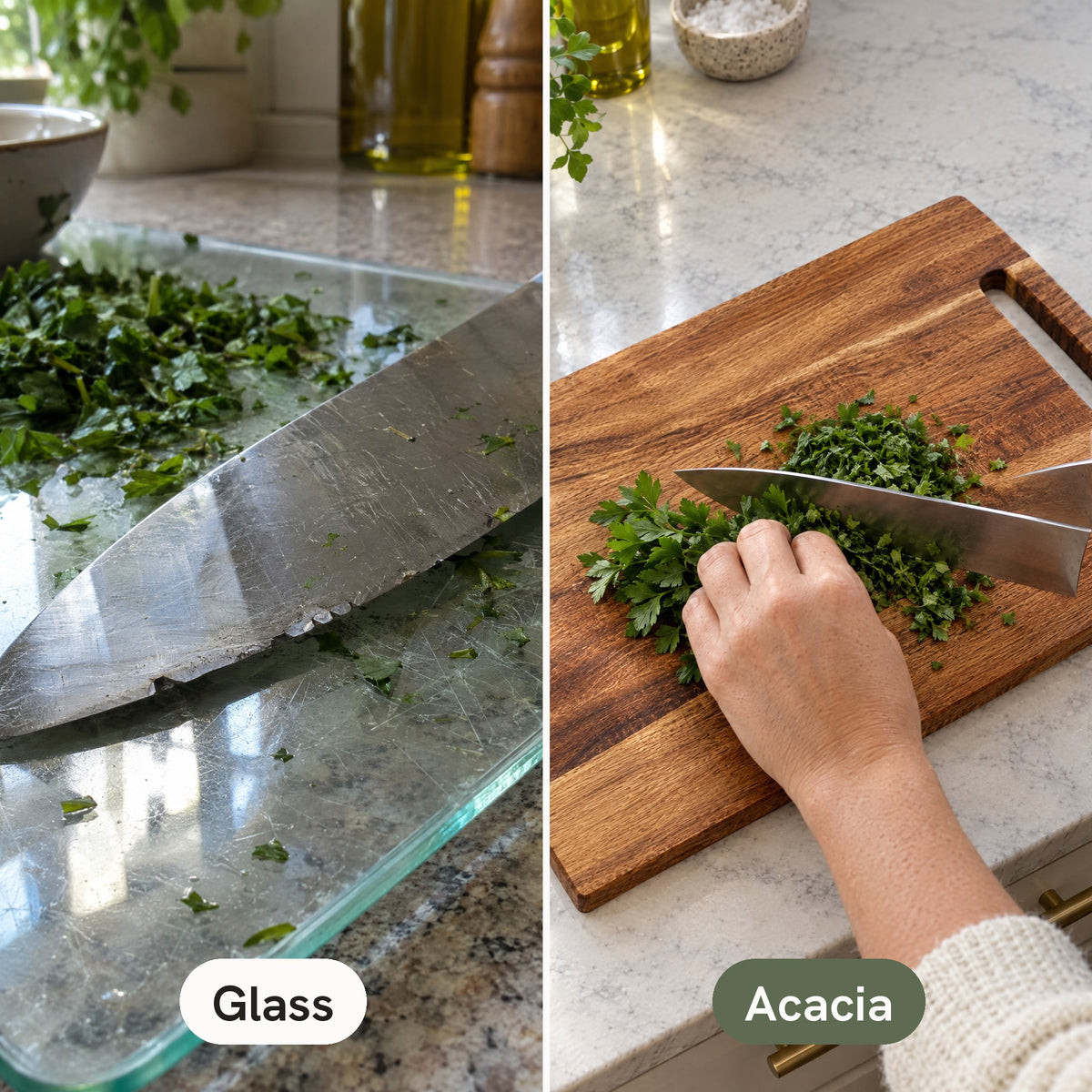
Knife dulled on a glass board next to a knife slicing herbs on an acacia board
3

My knives finally stay sharp

Glass, stone and steel boards look clean, but they dull a knife in weeks. Bamboo isn't much better.

Acacia is hard enough to last for years but gives just enough under the blade, so your knives stay sharp. And knife marks? A light sand and a drop of oil and they're gone.

  • Gentle on knivesWood gives under the edge
  • Renewable surfaceKnife marks sand and oil away
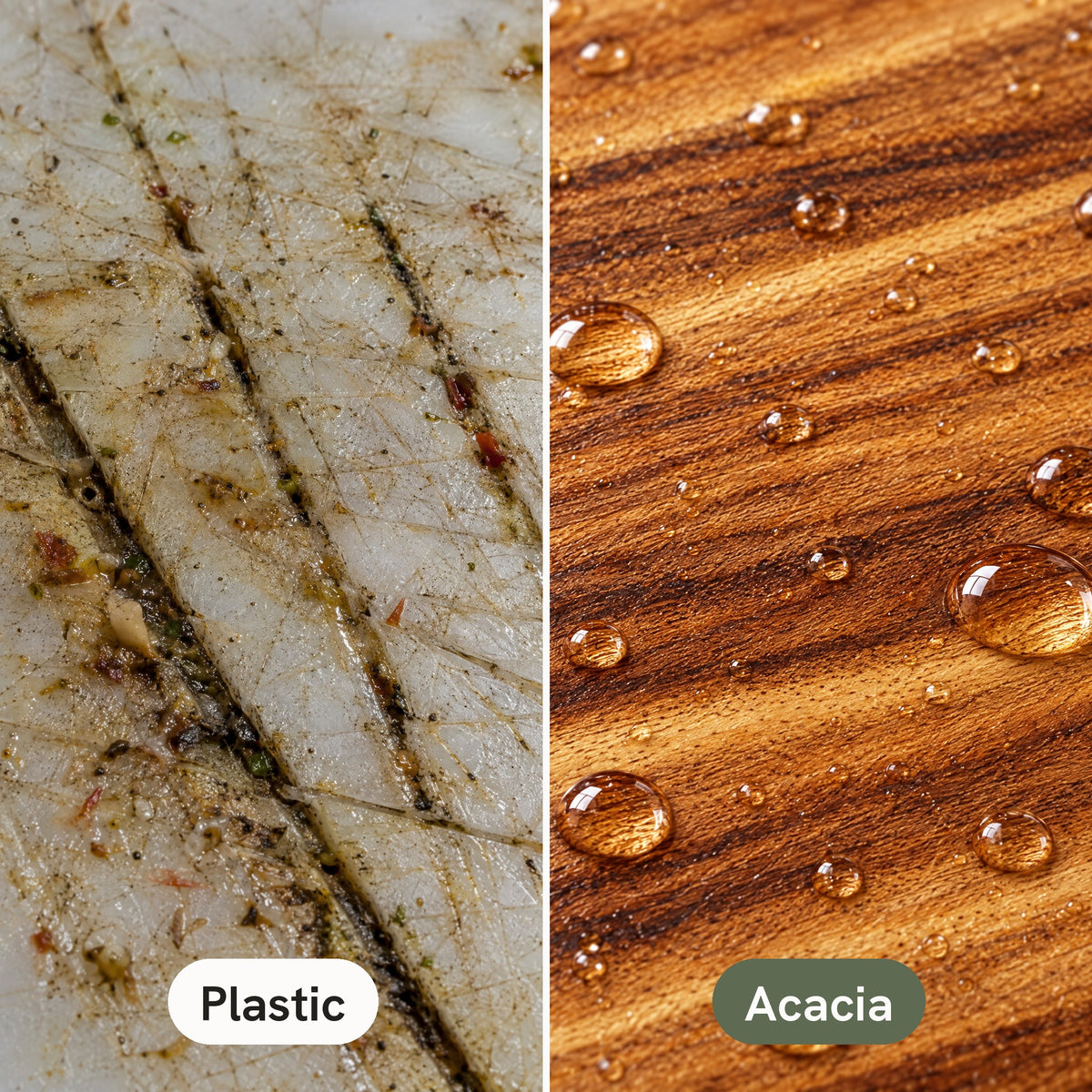
Grimy knife grooves in a plastic board next to water beading on an oiled acacia board
4

Yes, it's safe for raw chicken

I kept a plastic board "for meat" because I thought it was cleaner. It's the opposite. Plastic gets deep grooves that trap bacteria, even after the dishwasher.

In university lab tests, bacteria died off faster on wood than on plastic. Wash it with hot soapy water, dry it upright, done.

  • No deep groovesFewer places for bacteria to hide
  • Dries fastNatural oils keep water out

Source: Ak, Cliver et al., Journal of Food Protection, 1994

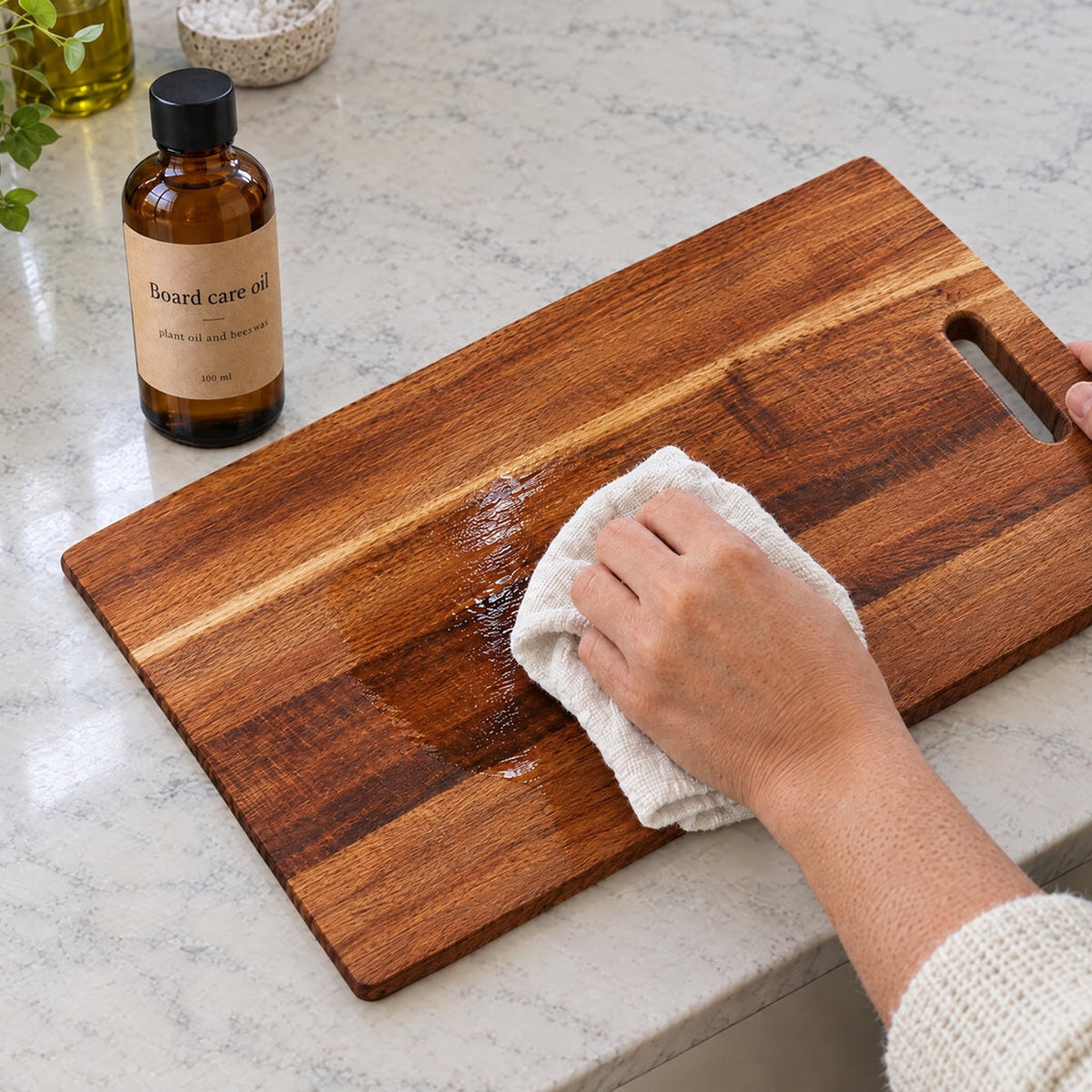
Oiling an acacia cutting board with a cloth
5

No lacquer, no plastic coating. Just oil.

Many "wood" boards in big stores are sealed in lacquer, and bamboo boards are strips held together with resin glue. Once that coating wears, it ends up in your food.

Ours are solid acacia finished with only food-safe oil. Care is easy: hand wash, dry upright, and two minutes of oil once a month.

  • Food-safe oil finishNo lacquer, no plastic coating
  • Two minutes a monthThat's all the care it needs
Freshly washed acacia boards drying on a stand
6

So beautiful they never go back in the cupboard

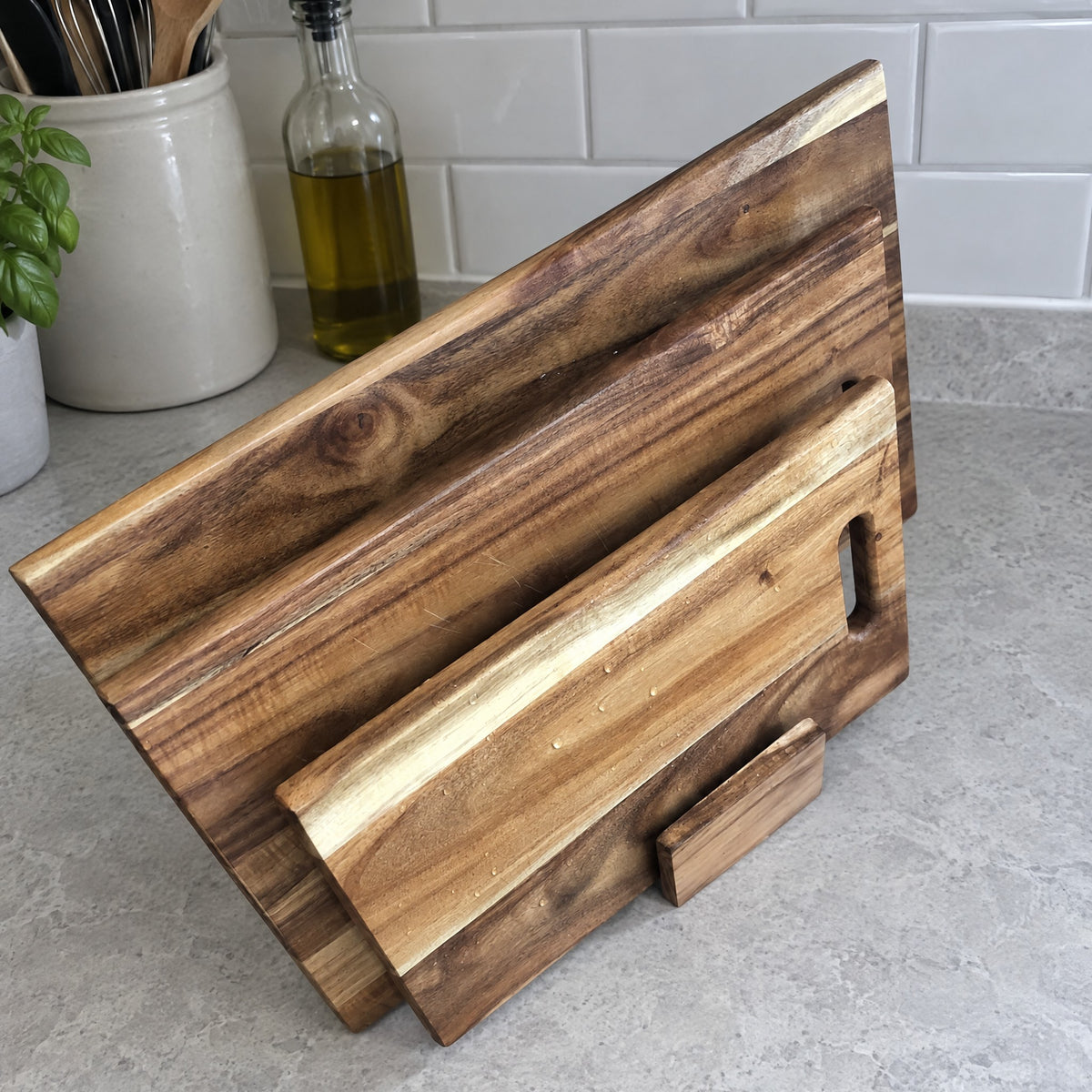
My plastic boards lived hidden in a cupboard. These have a rich golden grain with dark streaks, and no two boards look the same.

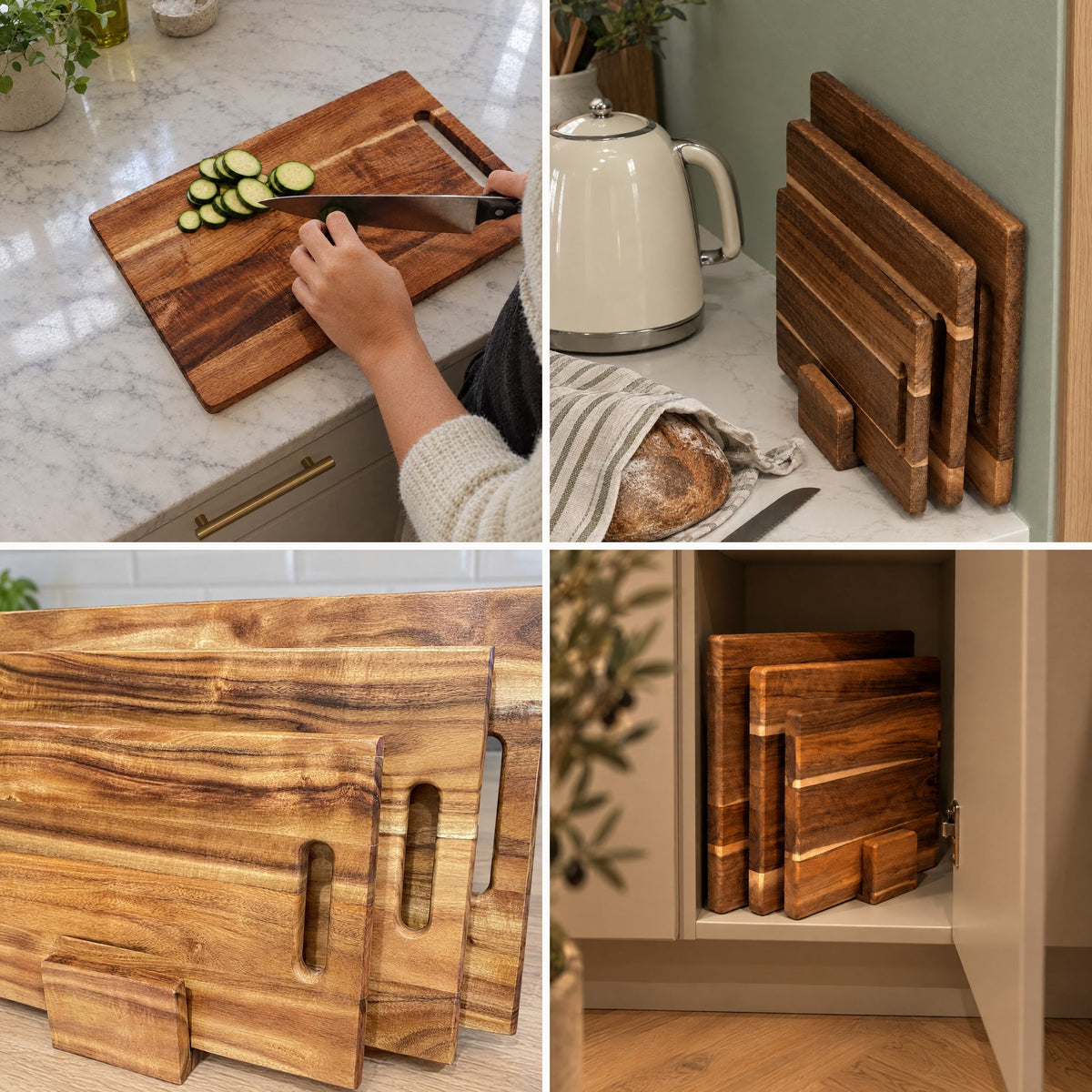
They stand on the counter now, and I serve cheese and bread straight off the small one.

  • One of a kindEvery board has its own grain
  • Cut-out handleLift, hang or serve
Customer photos of acacia cutting boards in their kitchens
7

Families everywhere are making the switch

I'm not the only one. Home cooks are swapping their plastic boards for acacia, and the reviews say what I felt: why didn't I do this sooner?

They say "knife marks are barely visible after a month" and "oiling it once a month takes two minutes", and they love knowing nothing from the board ends up in their food.

  • Nothing hiddenSolid acacia and food-safe oil
  • 30 day risk-free trialLove it or send it back

Acacia vs. what is on your counter

Properware acaciaPlastic board
No plastic shaving into food ✓ ✕
Knife marks sand away ✓ ✕
No deep grooves for bacteria ✓ ✕
Gentle on knives ✓ ✓
Natural, renewable material ✓ ✕
Lifetime warranty ✓ ✕
Dishwasher safe ✕ ✓

Questions people ask

Which size should I choose?

S (12 × 8 in) for fruit, cheese and quick jobs. M (14 × 10 in) is the everyday board. L (16 × 12 in) for big prep and carving. Many people take two or three, so raw meat and ready to eat food stay on separate boards.

Can it go in the dishwasher?

No. The heat and long soak make any wooden board crack or warp. A quick hand wash takes less than a minute.

What does the lifetime warranty cover?

If your board cracks, splits or breaks under normal use, we send you a new one for free. Normal knife marks and damage from the dishwasher or soaking are not covered.

What if it's not for me?

You get a 30 day risk-free trial. Get in touch through our contact page and we will sort it out.

Ready to chop without plastic?

This week only: up to 50% off and free gifts with your acacia boards.

Claim my discount →

Jennifer's story reflects her own experience. Wooden boards need hand washing and the occasional oiling. Sources are linked where we cite them.